
.svg)

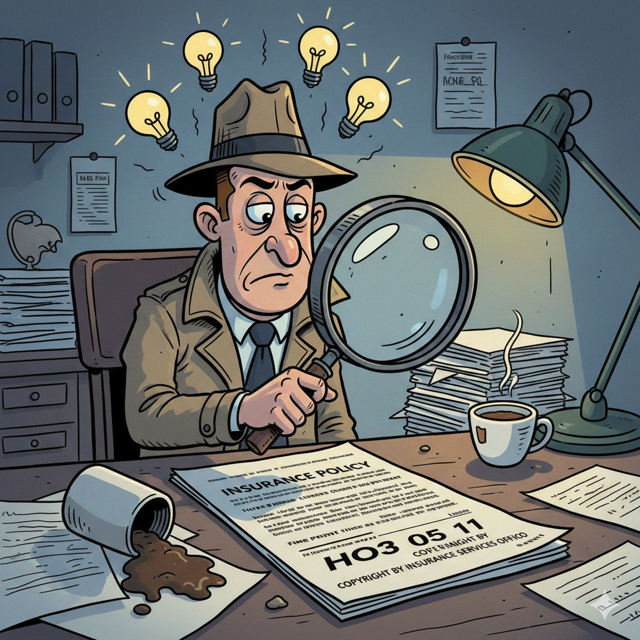

🧐 Ever Wondered What Those Tiny Codes at the Bottom of Your Insurance Policy Mean?
If you look at the bottom left-hand corner of your insurance forms, you’ll often find a string of letters, numbers, and dates that look like pure policy-speak gibberish.
But to an insurance professional, that tiny line of text is a decoder ring for your entire level of protection.
🔐 The Secret Code: HO3, HO5, and Dates
Most homeowners’ insurance policies are standardized. If you see something like HO3 05 11, here’s what it’s actually telling you:
- The Form (HO3):
This identifies exactly what is covered—and what isn’t.
An HO3 is the industry-standard Special Form policy, while an HO5 offers broader protection with fewer exclusions. - The Edition Date (05 11):
This represents the month and year that specific version of the policy language was finalized.
This matters because policy language evolves over time to address new risks, losses, and court rulings.
A newer edition can sometimes mean better clarity—or tighter exclusions.
🧬 Who Actually Wrote Your Policy?
Look a little further to the right on the page and you’ll usually see a copyright notice. This reveals the DNA of your policy.
- ISO (Insurance Services Office) or AAIS:
These are the two primary organizations that draft standardized insurance forms used nationwide.
Policies based on ISO or AAIS language tend to be predictable, well-tested, and widely interpreted by courts. - The Carrier’s Name:
If the copyright belongs to the insurance company itself, you’re dealing with a proprietary form.
These policies may include unique coverages—or very specific exclusions—you won’t find in standard forms.
⚠️ Why This Matters to You
Knowing these codes allows an experienced professional to understand your coverage—and potential pitfalls—in seconds.
If a carrier modifies standard language or adds endorsements, those changes are reflected right in that fine print at the bottom of the policy.
The Bottom Line
Don’t let the fine print remain a mystery. Understanding the foundation of your policy is the first step in identifying coverage gaps—before a loss exposes them.
When it comes to insurance, the smallest details often make the biggest difference.