.svg)


The claims process in first-party insurance has shifted dramatically, and not entirely for the better. I want to reflect on the move from collaboration to confrontation, and the rising costs associated with it.
🤝 The Efficient Past
It wasn't long ago that carrier adjusters and public adjusters (or contractors) would meet on-site. The process was simple: they would collaboratively agree on scope and pricing through direct communication and negotiation. This approach was fast, efficient, and successfully prioritized getting the policyholder's repairs started quickly.
⚖️ The Expert-Driven Present
Today, that collaboration is often replaced by immediate, widespread deployment of specialized experts from both sides—engineers, forensic accountants, and consultants.
This "expert-first" approach means:
• Each side produces conflicting, highly technical reports.
• Negotiations stall while adjusters argue over complex findings.
• The claim frequently escalates to Appraisal or Litigation.
The consequences are significant:
1. Time: The claim cycle is extended dramatically, delaying policyholders' recovery.
2. Cost: The combined expense of multiple experts dramatically increases the Loss Adjustment Expense (LAE) for carriers, costs that are ultimately borne by the industry.
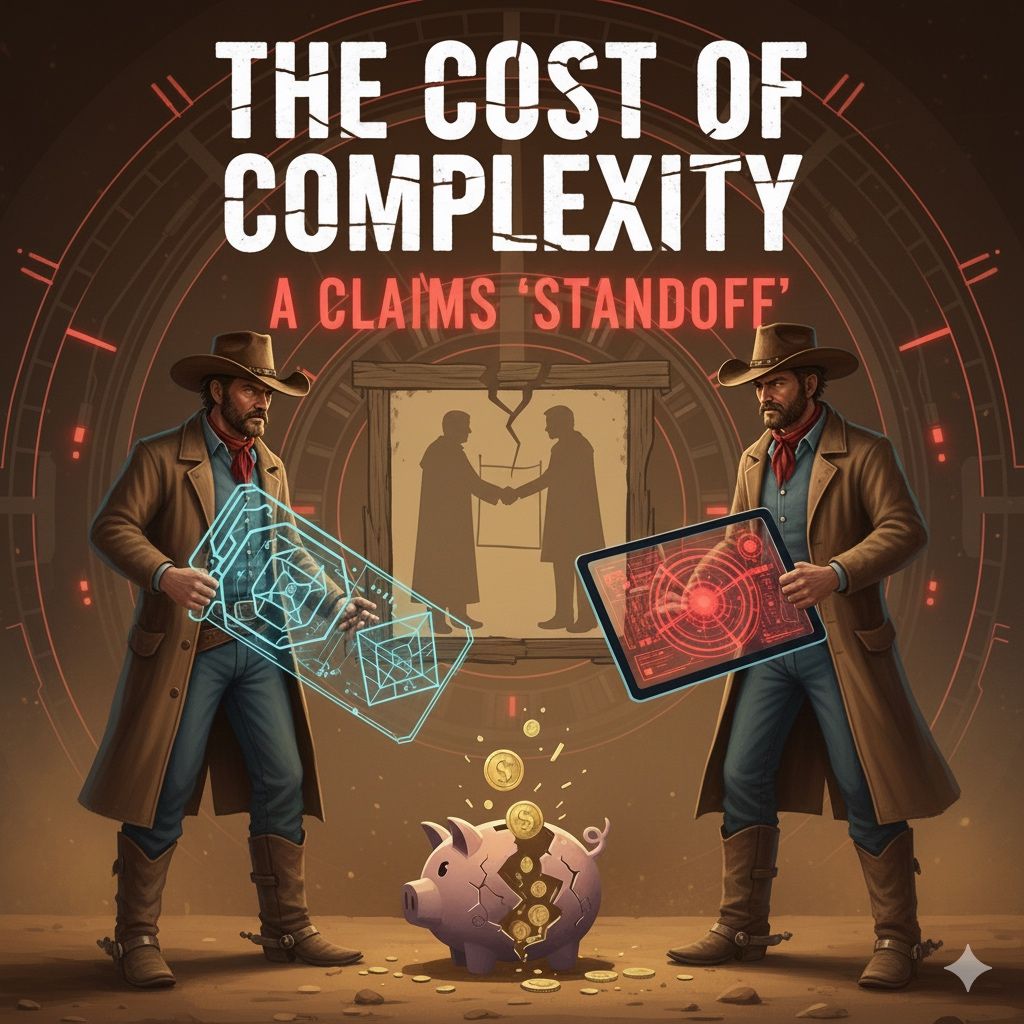
🛑 The Claims 'Standoff'
We are caught in a Claims 'Mexican Standoff,' where each party hires an expert simply because they anticipate the other will do the same. This reliance on expert armament, even for routine losses, creates friction and inefficiency.
While experts are vital for complex claims, they shouldn't be the default for every file.
To better serve our policyholders and the industry, we must return to a culture where reasonable adjusters work together to find common ground efficiently. Who will be the first to step back from this cycle of expert deployment and choose cooperation over escalation?